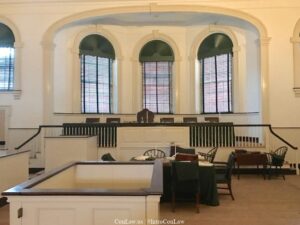
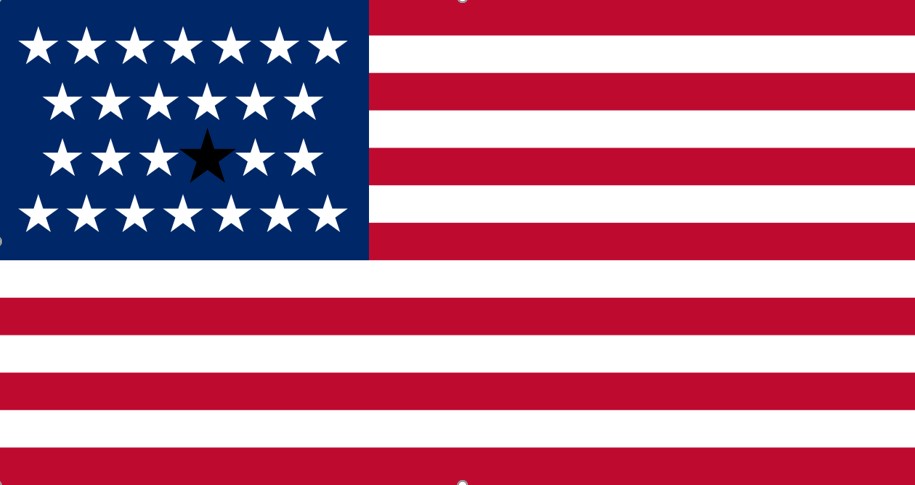
The Supreme Court decides the Amistad, African conscripts (slaves) brought into united States territorial waters by foreign merchants, whether accidentally or intentionally, are free by virtue of the Constitution for the united States, and international law.
Postscript: Sengbe Pieh (a.k.a. Joseph Cinque), the leader of the revolt on the Amistad, became a slave trader upon his return to west Africa
NOTE: The fact that African tribes engaged in the slave trade against each other reveals today’s “slavery reparations” argument to be absurd: Indigenous African’s as well as Portuguese merchants profited from the slave trade as well. Yet there is no call for the governments of Nigeria or Portugal to pay reparations.