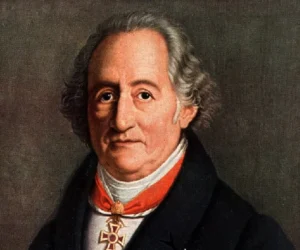
Wolfgang von Goethe dies, two months after completing Faust, a religious, epic poem, Book II, Act I, of which, has Faust striking a deal with Mephistopheles (Satan) by which he can realize the alchemist’s dream of turning iron into gold. The secret of this formula is supposed to provide unlimited wealth and power as its discoverer has a monopoly on the extension of new credit. The secret Mephistopheles reveals is paper money. But Faust’s power and wealth costs him “the liberty of his soul”; the realm descends into chaos, as more and more power money (Bills of Credit), which is worth less and less, must be printed to satisfy the insatiable demand for credit. “And people value this the same as gold? The court and army must take it as full pay? Much as I find it strange, I must accept it.”
[restored 8/30/2026] Thanks to Jim Lorenz for this entry.
It’s an old, old story. Some Pharaohs issued ‘golden’ scarabs made of clay, mud, some 7,000 years ago. I’d like to see Alan Greenspan appear before CONgress garbed as Dr. Faustus, and sing his testimony, in German. —— JL