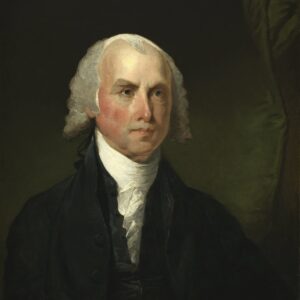
James Madison, a former Delegate to the Constitutional Convention, from the Commonwealth of Virginia, using the pseudonym “Publius,” publishes “Federalist Essay #42,” paragraph 12 of which explain that the purpose of the Commerce Clause is not a grant of power to Congress, but rather a prohibition on the States from erecting trade barriers between one other:
The defect of power in the existing confederacy, to regulate the between its several members, is in the number of those which have been clearly pointed out by experience. … A very material object of this power was the relief of the states which import and export through other states, from the improper contributions levied on them by the latter. Were these at liberty to regulate the trade between state and state, it must be foreseen that ways would be found out, to load the articles of import and export, during the passage through their jurisdiction, with duties which would fall on the makers of the latter, and the consumers of the former: We may be assured by past experience, that such a practice would be introduced by future contrivances; and both by that and a common knowledge of human affairs, that it would nourish unceasing animosities, and not improbably terminate in serious interruptions of the public tranquility…
Irwin A. Schiff, The Great Income Tax Hoax: Why You Can Immediately Stop Paying This Illegally Enforced Tax, (Hamden, Connecticut: Freedom Books, 1985), 51-52.