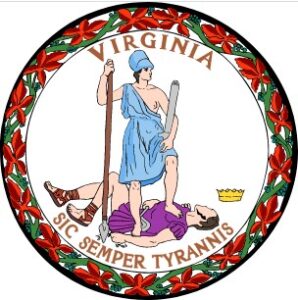
The legislature of the Commonwealth of Virginia passes the Religious Freedom Establishment Act, ending 234 years of state taxation to benefit the Church of England, established by Henry VIII (r. 1509 -1547) in 1534, prodding Virginia’s Anglicans (Episcopalians) to support their church out of their own funds. This helped to establish disestablishmentarianism as an American principle embodied in the First Amendment
NOTES:
Church establishment taxes were still collected in some European nations as of 2003.
Those who opposed the RFEA of 1777, were called “Antidisestablishmentarians,” coining one of the longest words in American-English.
“Chronology of Events, 1774-1804,” from The Debate on the Constitution, two volumes, Bernard Bailyn, ed., (New York: Library of America, 1992), 2:1034.
Winston Churchill, A History of the English-Speaking Peoples, four volumes, (New York: Dorset Press, 1956-58), 3:204